Why Blood Draws Go Wrong (and How At-Home Blood Draws Actually Help)
If you have ever followed all the usual lab prep advice and still had a difficult blood draw, you are not imagining things. Many lab prep articles repeat the same surface-level tips without explaining why blood draws fail, why veins collapse, or why some people feel unwell afterward.
After years of hands-on experience providing at-home blood draw services throughout Phoenix, Queen Creek, Gilbert, Chandler, Mesa, and the East Valley, we have seen that small, strategic adjustments make a meaningful difference. Below are practical, real-world tips most patients never hear, shared from mobile phlebotomists who encounter these challenges every day.
Before Your Blood Draw: What Actually Helps
1. Time Your Hydration Strategically
Most people hear “drink water” and stop there. What matters more is when you hydrate.
- Begin hydrating the evening before your blood draw, not just the morning of
- Sip water consistently instead of chugging right before the appointment
- Add electrolytes if you live in Arizona’s heat or sweat heavily
Proper hydration helps maintain vein elasticity, which is especially important for patients with small, fragile, or rolling veins.
2. Warmth Matters More Than You Think
Cold temperatures cause veins to constrict, making access more difficult. If your home or the weather is cool:
- Take a warm shower beforehand
- Wear a light long sleeve you can roll up
- Use a warm compress on your arm for 5 to 10 minutes
Warm veins are easier to access and often require fewer attempts.
3. Do Not Skip Salt Unless Instructed
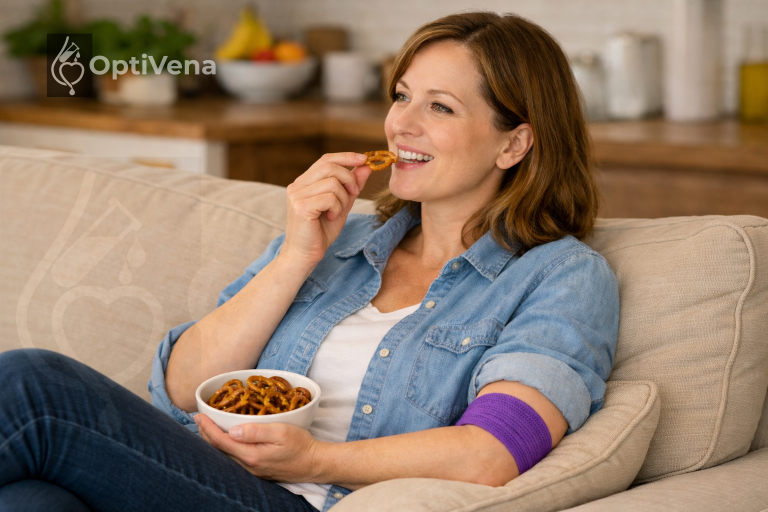
Low sodium levels can contribute to lightheadedness during blood draws. If you are not fasting, a small salty snack the night before can help support blood volume.
Always follow your provider’s instructions, but extreme restriction is not always helpful for everyone.
4. Avoid These Vein Stressors the Day Before
Certain habits quietly make blood draws more difficult:
- Alcohol, which causes dehydration
- Intense workouts, which temporarily alter blood volume
- Excess caffeine, which constricts blood vessels
Avoiding these for 12 to 24 hours beforehand can significantly improve the experience.
During Your Blood Draw: What Experienced Phlebotomists Watch For
Many people assume the needle itself causes problems. In reality, body position and muscle tension matter just as much.
- Let your arm rest naturally instead of holding it rigid
- Avoid repeatedly clenching your fist
- Breathe slowly to prevent blood pressure drops
With an at-home blood draw, your phlebotomist can adjust positioning, lighting, and pacing without the pressure of a busy lab schedule.
After Your Blood Draw: Recovery Tips That Prevent Issues
1. Pressure Is About Technique, Not Force
Firm, steady pressure is more effective than pressing hard. Keep the arm relaxed and straight for best results.
2. Eat Smart After Fasting
Combine protein and carbohydrates instead of sugar alone to stabilize blood sugar and reduce dizziness.
3. Watch for Delayed Lightheadedness
Some people feel fine immediately but become lightheaded later, especially after standing quickly or being in heat. Rest and hydrate before resuming activity.
Why At-Home Blood Draws Improve the Entire Experience
In crowded labs, patients are often rushed, anxious, and dehydrated after long waits. With mobile blood draw services, the environment works in your favor.
Clients consistently report:
- Fewer failed attempts
- Less dizziness and anxiety
- Better recovery after the draw
- More controlled specimen handling
At OptiVena Mobile Phlebotomy, we frequently work with clients who have been told they are “hard sticks,” feel anxious during lab visits, or need extra care.
When Preparation Matters Even More
Extra preparation is especially important if you:
- Have fainted during blood draws before
- Are undergoing therapeutic phlebotomy
- Have low blood pressure or anemia
- Are sensitive to fasting
Sharing this information ahead of time allows your phlebotomist to make adjustments that many traditional labs simply cannot accommodate.
A Better Blood Draw Starts With the Right Setting
Blood draws do not have to be uncomfortable or stressful. With proper preparation and a calm, controlled environment, most complications can be avoided entirely.
Whether you need routine lab work, specialty kit testing, or therapeutic phlebotomy, OptiVena’s at home lab service provides a safer, more personalized experience across the Phoenix Metro and East Valley.