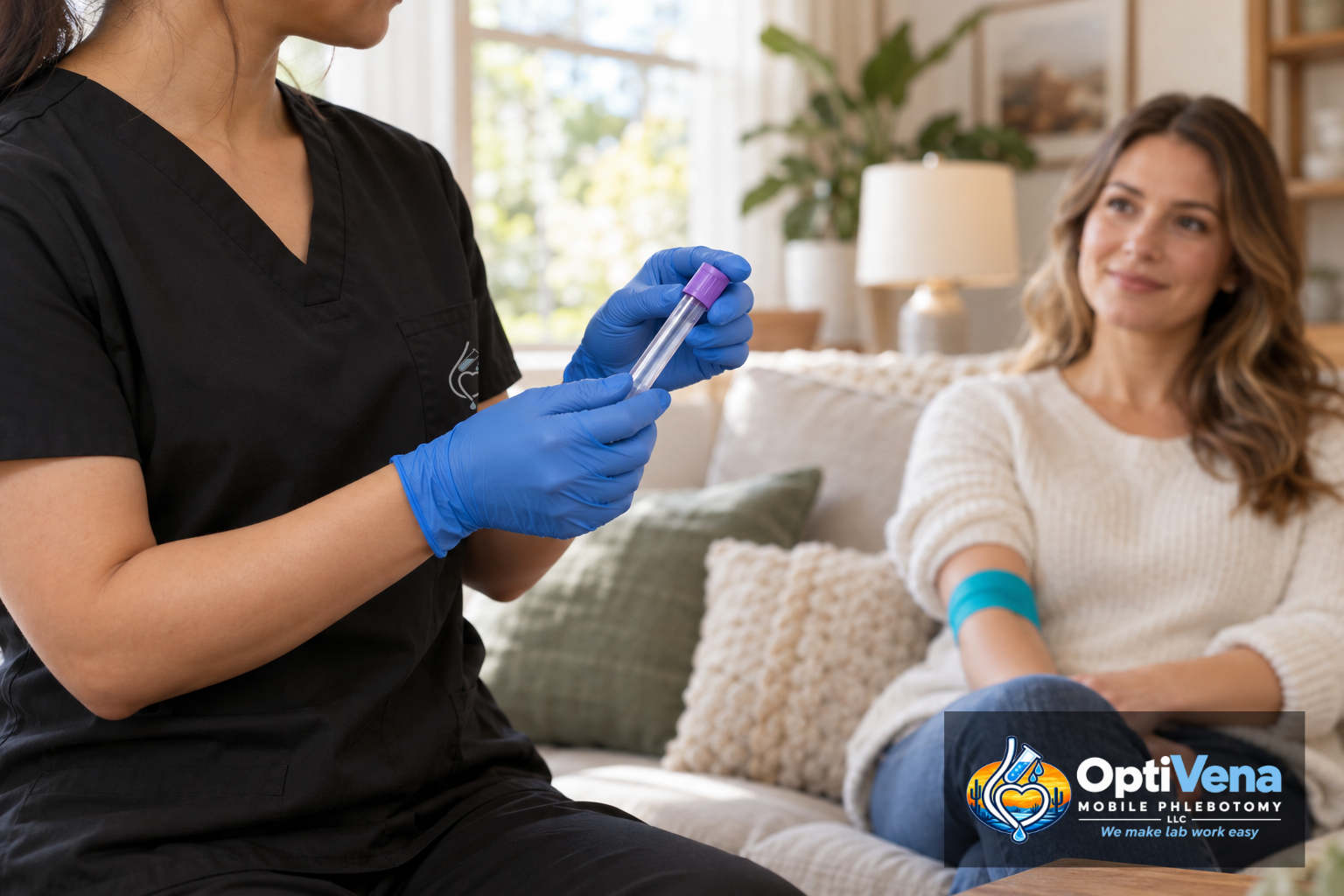
Why Do Blood Draws Make You Dizzy? Here’s What’s Really Going On

If you’ve ever felt lightheaded during or after a blood draw, you’re not alone. It’s one of the most common reactions people have even among those who’ve had their blood drawn dozens of times. The good news? Feeling dizzy doesn’t mean something’s wrong with you. It’s usually your body’s natural response to stress, changes in blood pressure, or even the thought of needles.
At OptiVena Mobile Phlebotomy, we’ve seen it all and we specialize in making the process calm, professional, and comfortable right in your own home. Here’s what’s really happening when dizziness strikes, and what you can do to prevent it.
The Science Behind Feeling Dizzy During Blood Draws
When your blood is drawn, your body experiences a brief drop in blood pressure. For some people, this triggers a response called vasovagal syncope, where your nervous system temporarily overreacts to the sight of blood or the sensation of the needle.
This reaction can cause:
- Lightheadedness or nausea
- Sweating or clamminess
- Pale skin
- Blurred vision
- In rare cases, fainting
It’s your body’s way of trying to protect itself even though the procedure is completely safe. Think of it as your brain saying, “Time to sit down!” before things feel overwhelming.
Common Reasons People Feel Dizzy After a Blood Draw
While everyone reacts differently, here are the most common causes we see:
1. Not Eating or Drinking Enough
Fasting before certain lab tests is common, but skipping meals or being dehydrated can drop your blood sugar and make you feel faint. Always confirm with your provider whether fasting is necessary and if it is, hydrate well the night before.
2. Anxiety or Anticipation
For some, dizziness starts before the draw even begins. Worrying about the needle or over-focusing on the process can increase adrenaline, which later causes a quick dip in blood pressure when the stress passes.
3. Standing Too Quickly Afterward
Getting up too soon after your blood draw can make your body feel unsteady. We always recommend staying seated for a minute or two, especially after larger draws or therapeutic phlebotomy.
4. Hot Weather or Poor Circulation
Living in Arizona’s heat means dehydration and lower blood volume are common. Warm temperatures can also dilate your blood vessels, making you feel lightheaded after standing or walking.
5. Low Iron Levels
If you’ve recently donated blood, had surgery, or have a condition like anemia, your body might be more sensitive to blood volume changes.
How to Prevent Dizziness Before and After Your Blood Draw
You can greatly reduce the chance of feeling faint by preparing properly:
- Drink water throughout the day before your appointment.
- Eat a balanced meal (unless fasting is required).
- Take deep breaths and try to relax your shoulders before the draw.
- Stay seated afterward until you feel steady.
- Bring a snack something salty or sweet can help restore your blood sugar quickly.
If you’ve had fainting spells before, let your phlebotomist know so they can take extra precautions such as positioning you in a reclined chair or performing the draw while you’re seated comfortably at home.
Lightheadedness and Therapeutic Phlebotomy: What Clients Should Know
Therapeutic phlebotomy involves removing a larger volume of blood than a routine lab draw, which means lightheadedness can be more common especially for clients managing conditions like hemochromatosis or elevated hematocrit levels. This reaction is expected and manageable with the right preparation and care.
Before a therapeutic phlebotomy appointment, clients are encouraged to:
- Eat a protein-rich meal unless instructed otherwise by their provider
- Hydrate well the day before and the morning of the procedure
- Avoid alcohol and intense exercise beforehand
After therapeutic phlebotomy, extra care is important:
- Remain seated or reclined for several minutes after the draw
- Drink fluids immediately following the appointment
- Avoid strenuous activity for the rest of the day
This is where at-home blood draws make a meaningful difference. Receiving therapeutic phlebotomy in a calm, familiar environment allows clients to rest immediately, avoid travel while lightheaded, and receive one-on-one care without feeling rushed. Our mobile phlebotomy team is experienced in supporting clients who need a little extra time, monitoring, and reassurance all in the comfort of home.
Why At-Home Blood Draws Make a Difference
Having your blood drawn in a familiar, relaxed setting makes a big difference for people who experience dizziness or anxiety. With OptiVena’s mobile phlebotomy service near you, you can:
- Stay hydrated without rushing to a lab
- Sit or lie down comfortably in your own space
- Avoid crowded waiting rooms and long fasting times
- Receive care from experienced, gentle phlebotomists who specialize in minimizing discomfort
Our clients often say that having their at-home blood draw service feels less stressful and more personal and that alone can help prevent dizziness.
When to Talk to Your Doctor
Occasional dizziness is usually harmless, but if it happens frequently or lasts longer than a few minutes, it’s worth discussing with your provider. Sometimes, underlying factors like low blood pressure, dehydration, or anemia can contribute.
Why Clients Trust OptiVena Mobile Phlebotomy
OptiVena provides professional mobile lab work collection for clients across the East Valley, including Queen Creek, Gilbert, Chandler, Mesa, San Tan Valley, Scottsdale, Phoenix and every are in between. We specialize in helping clients who experience anxiety, dizziness, or sensitivity during blood draws with a calm, compassionate approach every time.