Why Some People Faint During Blood Draws: The Science Behind Vasovagal Response
If you have ever felt lightheaded, sweaty, or faint during a blood draw, you are not alone. It is one of the most common reactions patients experience during medical procedures. The good news is that it is usually harmless and can be managed safely when handled by a skilled professional. At OptiVena Mobile Phlebotomy, we specialize in creating a calm and supportive environment for clients who have a history of fainting or anxiety about needles.
Understanding what causes this reaction, known as a vasovagal response, can help you feel more in control and confident during your next blood draw.
What Is a Vasovagal Response?
A vasovagal response occurs when the body overreacts to certain triggers such as pain, stress, or the sight of blood. When this happens, your heart rate and blood pressure drop suddenly, reducing blood flow to the brain. This can cause dizziness, sweating, nausea, or fainting.
The reaction is caused by stimulation of the vagus nerve, a major nerve that helps control heart rate and blood vessel dilation. When the vagus nerve becomes overstimulated, it signals the body to lower blood pressure and slow the heart rate. While this is the body’s way of protecting itself, it can lead to that familiar feeling of lightheadedness or even a brief loss of consciousness.
Common Triggers
Not everyone experiences a vasovagal response the same way, but some triggers are more common than others:
- Anxiety or fear of needles
- Seeing blood or medical equipment
- Standing for long periods
- Pain or anticipation of pain
- Dehydration or skipping meals before an appointment
For many people, it is a combination of both physical and emotional stress that causes the reaction.
The Science Behind Fainting
When blood pressure and heart rate drop, less oxygen reaches the brain. That is why you might suddenly feel dizzy or your vision might fade to black for a few seconds. Your body is essentially hitting a reset button. Once you lie down and blood flow returns to normal, most people recover quickly without any lasting effects.
It is important to remember that fainting from a vasovagal response is not dangerous in itself. However, falling or hitting an object can cause injury, which is why professional care and proper positioning are so important during a blood draw.
How to Prevent Fainting During a Blood Draw
There are several ways to minimize your chances of fainting before or during a blood draw:
- Eat and Stay Hydrated
Having a small meal and plenty of fluids before your appointment helps maintain blood pressure and reduces the likelihood of dizziness. - Communicate with Your Phlebotomist
Let your phlebotomist know if you have fainted or felt lightheaded before. This allows them to take extra precautions such as positioning you lying down and monitoring you more closely. - Take Slow, Deep Breaths
Breathing steadily helps keep oxygen levels balanced and prevents hyperventilation, which can make symptoms worse. - Avoid Watching the Procedure
Looking away during the blood draw can prevent visual triggers that stimulate the vasovagal response. - Tense Your Muscles
Gently tightening your legs and arms before and during the draw can help keep blood circulating and maintain blood pressure.
How OptiVena Helps Clients with Vasovagal Response
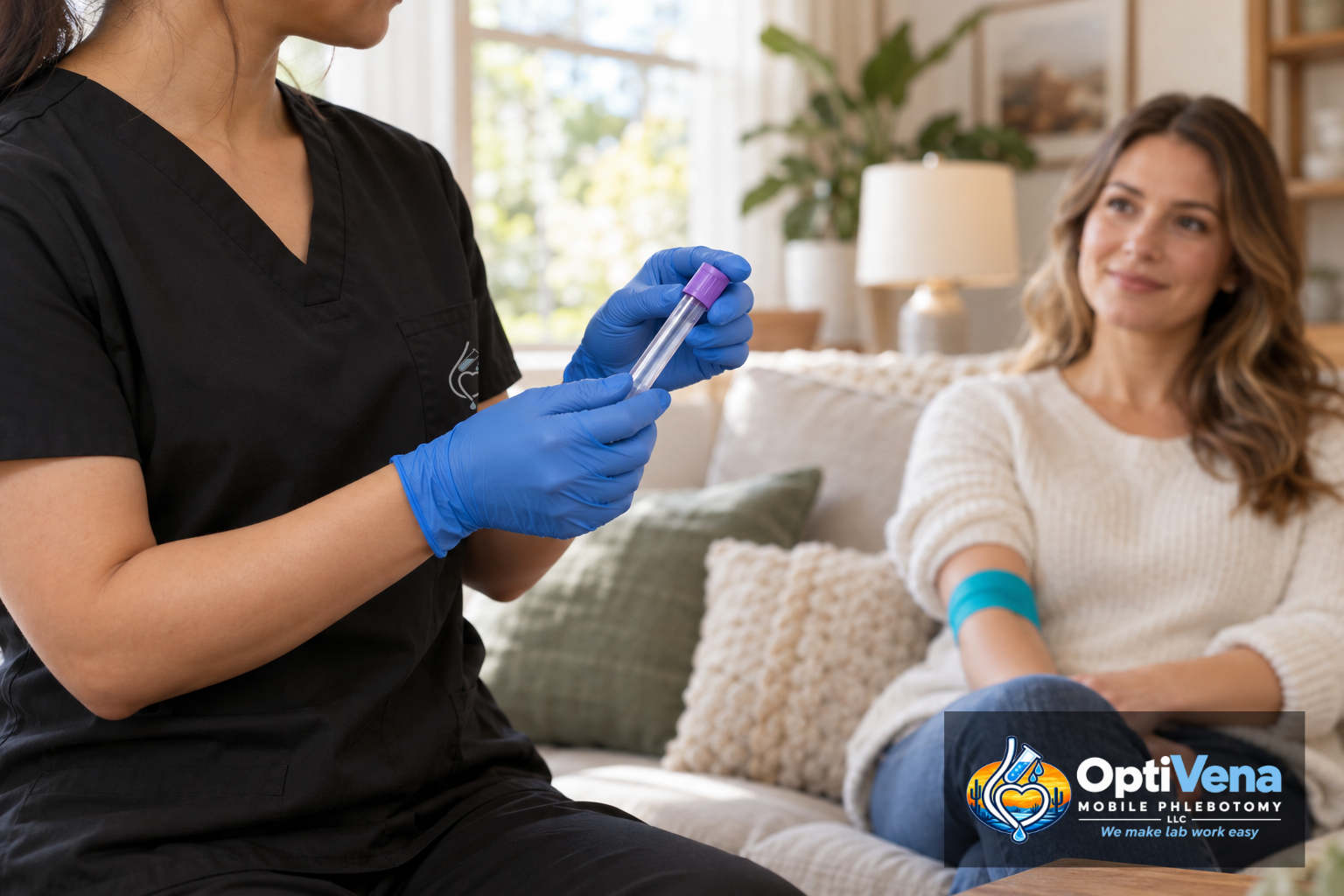
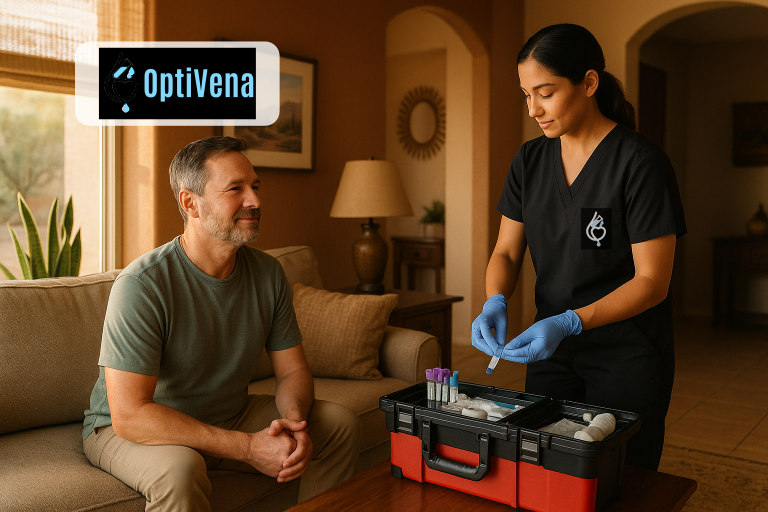
One of the biggest advantages of choosing OptiVena’s mobile lab service is being able to have your blood drawn in a setting where you feel safe and comfortable. Anxiety often decreases significantly when patients can stay in familiar surroundings.
Our phlebotomists are trained to recognize the early signs of a vasovagal response such as sweating, pallor, or a change in breathing pattern. If you start to feel lightheaded, we can quickly adjust your position, provide water, or pause to let your body recover. Our priority is always your safety and comfort.
Because our appointments are one-on-one, you will never feel rushed or pressured. This personalized approach helps many clients who have previously fainted at clinics complete their lab work successfully at home without issues.
Why At-Home Blood Draws Make a Difference
Having your blood drawn at home can significantly reduce the stress and environmental triggers that often lead to fainting. You are not surrounded by other patients, waiting rooms, or medical noises that can heighten anxiety. You can sit or lie down in your own space and take as much time as you need to feel comfortable.
In addition to the comfort factor, mobile phlebotomy ensures a smooth process with minimal disruption to your day. Whether you are in Phoenix, Mesa, Chandler, Gilbert, or Queen Creek, our team brings professional care directly to your doorstep.
Experiencing a vasovagal response during a blood draw is common and nothing to be ashamed of. It is simply your body’s nervous system responding to a stressful situation. By understanding the cause and taking preventive steps, you can make your next blood draw a calm and successful experience.
OptiVena Mobile Phlebotomy is here to help clients who experience anxiety, dizziness, or fainting during lab work. With gentle techniques, personalized attention, and the comfort of your own home, we make blood draws safer and more comfortable for everyone.