Can Therapeutic Phlebotomy Be Done Outside a Hospital?
Most patients who are prescribed therapeutic phlebotomy assume they need to go to a hospital or clinical facility to get it done. That assumption is understandable. It is a medical procedure, it involves blood removal, and it comes with a doctor's order. It sounds like the kind of thing that belongs in a clinical setting.
But for many patients, the hospital or blood center route turns out to be more complicated than expected. Understanding why that happens, and what the alternatives are, makes a significant difference in how consistently treatment gets done.
Why Hospitals Are Not Always the Right Fit
Hospitals do perform therapeutic phlebotomy, but it is rarely a streamlined process. Most hospital-based therapeutic phlebotomy is handled through infusion centers or outpatient departments that also manage chemotherapy, IV medications, and other scheduled treatments. Wait times can be long, appointment availability is often limited, and the environment is not always designed with a therapeutic phlebotomy patient's specific needs in mind.
For patients who need frequent sessions, weekly or biweekly during an initial depletion phase, the logistics of navigating a hospital system repeatedly can become a barrier to consistent treatment. When treatment gets delayed or skipped because scheduling is difficult, iron levels or hematocrit climbs again, which means the depletion phase takes longer and progress stalls.
Why Blood Donation Centers Often Turn Patients Away
A common alternative patients try is blood donation centers. On the surface it seems like a reasonable option since therapeutic phlebotomy and blood donation both involve drawing a unit of blood.
The problem is that donation centers operate under guidelines designed to protect blood recipients, not to treat patients. Their eligibility requirements exist for good reason, but they are not built around therapeutic phlebotomy protocols. If your hematocrit is too high, your hemoglobin falls outside their accepted range, your prescribed removal volume differs from their standard draw, or your treatment frequency does not align with their donation intervals, you will be turned away.
For patients who have just been diagnosed with hemochromatosis, polycythemia vera, or elevated hematocrit from testosterone replacement therapy and are trying to start treatment, being turned away from a donation center is a frustrating setback that delays care. If you want to understand more about the conditions that commonly require therapeutic phlebotomy and how treatment is prescribed, the post on hemochromatosis and therapeutic phlebotomy covers that in detail.
What "Outside a Hospital Setting" Actually Means
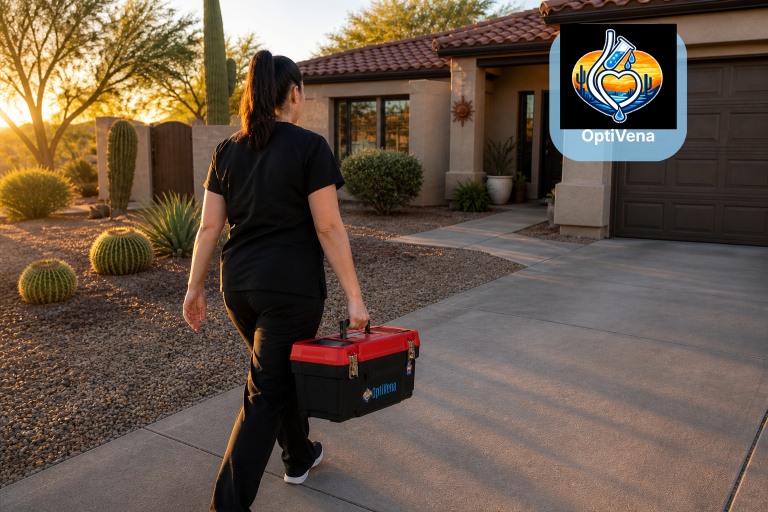
The alternative that many patients do not know exists is mobile therapeutic phlebotomy, a service where a licensed, certified phlebotomist comes to your home or office and performs the procedure according to your doctor's exact orders.
This is not a workaround. It is a legitimate medical service performed by trained professionals using proper equipment, biohazard disposal protocols, and vitals monitoring before and after the procedure. The only difference from a hospital or clinical setting is location. The care comes to you instead of requiring you to travel to it.
For patients managing a long-term condition that requires ongoing therapeutic phlebotomy, this distinction matters. Receiving treatment at home removes the scheduling friction, the travel time, the waiting rooms, and the recovery commute that make consistent treatment harder to maintain.
How At-Home Therapeutic Phlebotomy Works
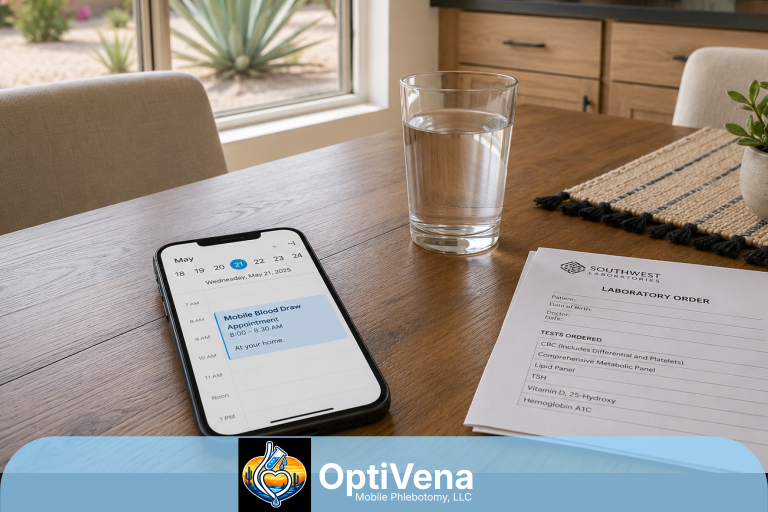
The process is straightforward. You provide a valid physician's order specifying the volume to be removed and the frequency of treatment. An appointment is scheduled at a time that works for you, with early morning and Saturday options typically available.
When your phlebotomist arrives, they confirm your identity and lab order, check your vitals, and walk you through the procedure before starting. The draw itself takes approximately 30 to 45 minutes depending on the prescribed volume. Vitals are checked again after the procedure, and all biohazard materials are removed before your phlebotomist leaves. You recover at home, without needing to drive anywhere afterward.
There are no donation eligibility restrictions, no frequency caps beyond what your doctor prescribes, and no requirement to meet criteria designed for healthy volunteer donors. If you have a valid order, you qualify.
Who This Option Works Best For
At-home therapeutic phlebotomy is particularly well suited for patients on a recurring treatment schedule, whether that is weekly sessions during an iron depletion phase or monthly maintenance draws once levels stabilize. The convenience of not rearranging your schedule around a facility visit every time makes it significantly easier to stay consistent with treatment, and consistency is what produces results with conditions like hemochromatosis and polycythemia vera.
It also works well for patients who have previously been turned away from donation centers due to eligibility conflicts, patients whose prescribed frequency exceeds what donation centers allow, and anyone who prefers a calmer, more private environment for a procedure that can take up to an hour.
Therapeutic Phlebotomy Near You in the Phoenix Metro Area
OptiVena Mobile Phlebotomy provides at-home therapeutic phlebotomy across the Phoenix Valley, including Phoenix, Scottsdale, Tempe, Gilbert, Chandler, Mesa, Queen Creek, and Buckeye. A certified mobile phlebotomist comes to your location with all necessary supplies, performs the procedure according to your provider's orders, and handles everything from vitals monitoring to biohazard disposal before leaving.
Appointments are available as early as 8am on weekdays and include Saturday scheduling. All we require is a valid physician's order. There are no donor eligibility restrictions and no frequency caps outside of what your doctor prescribes.
To learn more about how at-home therapeutic phlebotomy works, what to expect during your first appointment, and pricing for Phoenix metro patients, visit our at-home therapeutic phlebotomy service page.