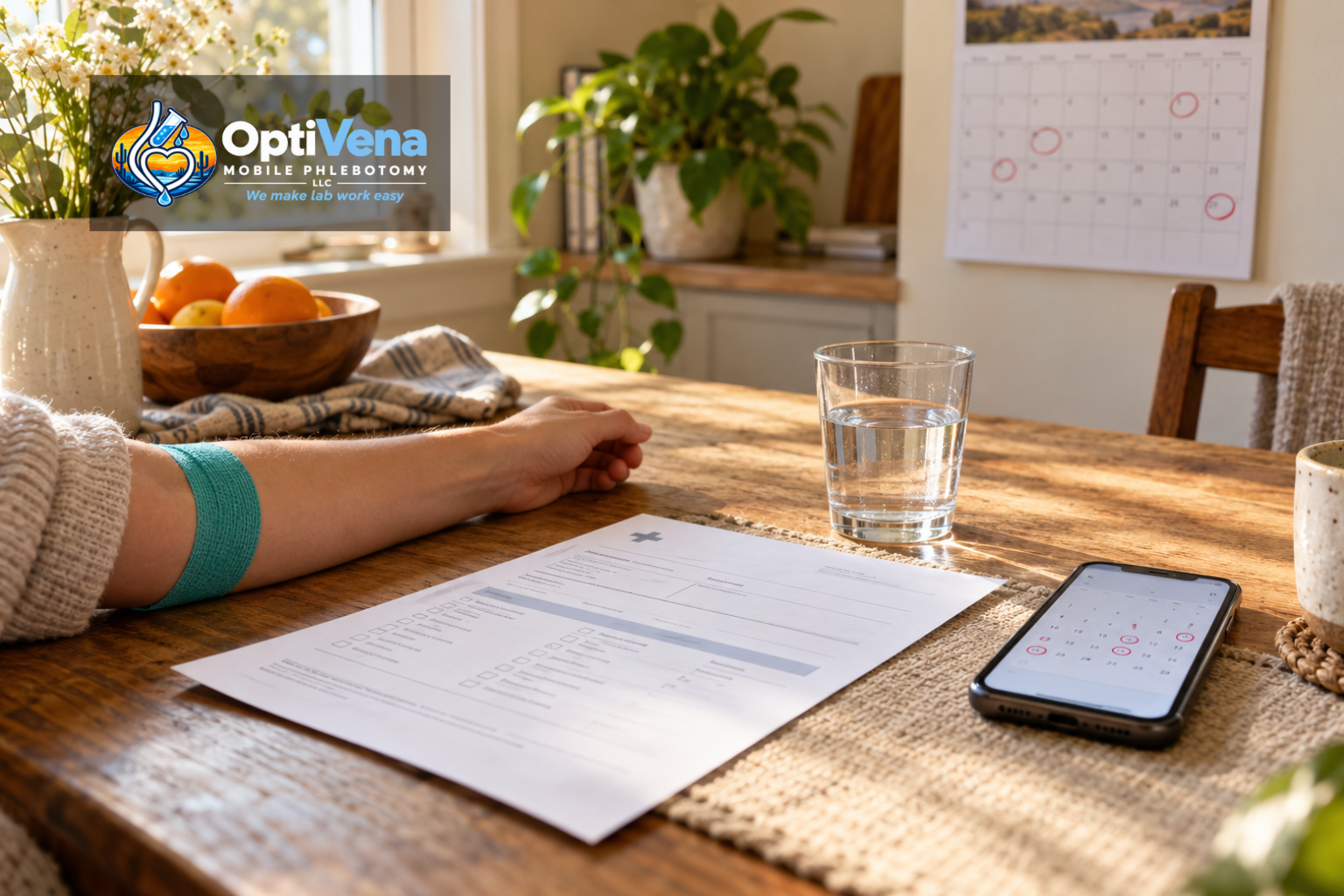
You Don't Have to Go to a Lab for Blood Work (Most People Don't Know This)
For most people, getting blood work done feels like a non-negotiable chore. You get the order from your provider, find a patient service center, take time off work, sit in traffic, wait in a crowded room, and hope the appointment goes smoothly.
That routine is so ingrained that many people never stop to ask a simple question:
Do I actually have to go to a lab to get my blood drawn?
The answer surprises a lot of people.
In many cases, blood work can be done at home by a licensed mobile phlebotomist, with samples sent to the same major laboratories you already know. Yet countless patients only learn this option exists after a frustrating lab visit or by accident while searching online for alternatives.
If this is new to you, you're not alone.
Why Labs Became the Default Option
Patient service centers became the standard for blood work because they were designed for efficiency at scale. Centralized locations allow labs to process large volumes of samples quickly, and for a long time, this model worked reasonably well.
What has not changed at the same pace is how people live.
Today, many patients are balancing work, family responsibilities, caregiving, chronic conditions, and unpredictable schedules. A "quick lab visit" often is not quick at all, especially when wait times, travel, and recovery are factored in.
Healthcare systems were built around throughput. People's lives are built around flexibility.
That mismatch is why alternative care models, including mobile phlebotomy, are becoming more common.
What Mobile Phlebotomy Actually Is
Mobile phlebotomy is exactly what it sounds like.
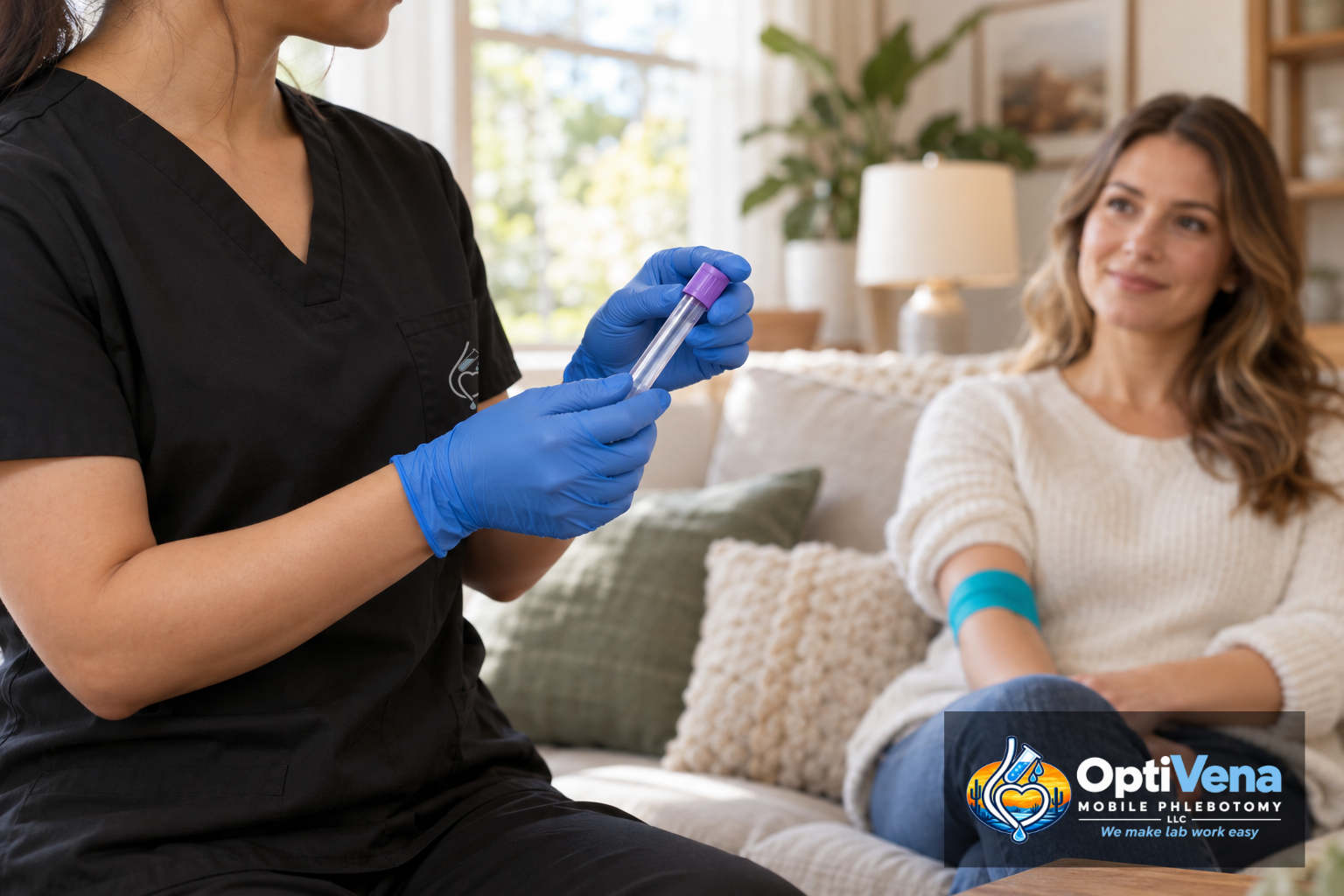
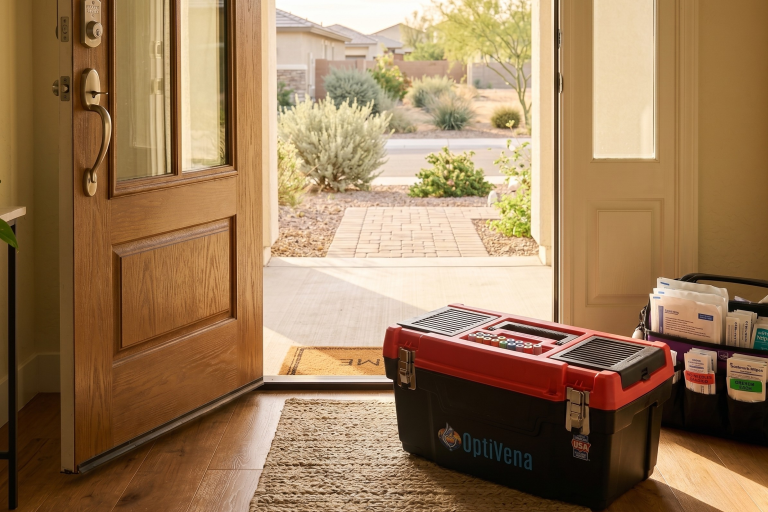
Instead of traveling to a patient service center, a licensed phlebotomist comes to your home or workplace to collect your blood sample. The draw is performed using the same professional standards, equipment, and protocols you would expect in a traditional setting.
After the appointment, your samples are properly labeled, processed, and delivered to the appropriate laboratory for testing. Results are sent to your provider the same way they would be after a lab visit.
The difference is not the testing. The difference is where and how the blood draw happens.
Why Most People Do Not Know This Option Exists
Mobile blood draw services are rarely discussed unless a provider specifically mentions them. Many patients assume insurance requires them to go to a lab or that at-home options are reserved only for homebound individuals.
In reality, mobile phlebotomy is often a self-pay service, which means it does not show up in the same way traditional lab visits do. Because of that, people do not discover it until they actively start searching for alternatives.
That moment usually comes after long wait times, difficulty scheduling around work, transportation challenges, or feeling rushed or uncomfortable during a draw.
Finding out that blood work can be done at home often feels less like a luxury and more like learning a solution existed all along.
The Real Tradeoff Is Not Price — It's Time
When people first hear about mobile phlebotomy, the next question is almost always about cost.
That makes sense, especially in today's economy. But what often gets overlooked is how much time and energy a traditional lab visit actually consumes.
A standard lab appointment can involve driving across town, finding parking, sitting in a waiting room, rearranging work or childcare, waiting again after the draw, and navigating traffic while feeling lightheaded or tired.
None of that shows up as a line item on a bill, but it still costs you something.
With an at-home blood draw, that time stays yours. There is no commute, no waiting room, and no pressure to rush out afterward. Many people schedule appointments early in the morning, during a break in their workday, or at a time that fits their routine rather than disrupting it.
For a growing number of patients, the decision is not about finding the cheapest option. It is about choosing the option that respects their time.
Why Self-Pay Does Not Always Mean More Expensive
Self-pay services are often misunderstood as automatically being out of reach. In reality, they simply make the cost visible instead of spreading it across indirect expenses.
When people evaluate convenience-based healthcare, they are often weighing questions like how much time this will take out of their day, whether they need to take time off work, whether transportation is required, and whether they can rest immediately afterward.
When those factors are considered, many patients decide that paying for a service that comes to them is a reasonable tradeoff, not an indulgence.
It is not about affordability in the traditional sense. It is about efficiency, predictability, and peace of mind.
Who At-Home Blood Draws Tend to Work Best For
Mobile phlebotomy is used by a wide range of people, including busy professionals, parents managing school schedules and childcare, caregivers coordinating appointments for others, individuals with chronic conditions who need frequent blood work, and anyone who prefers privacy and a calmer environment.
Some people use mobile services occasionally. Others switch permanently once they experience how much easier it can be. Whether it is a routine annual draw or recurring care, a mobile lab service in Gilbert and surrounding East Valley cities makes the process significantly easier to maintain
What to Expect From an At-Home Blood Draw
While each provider operates a little differently, most mobile blood draw appointments follow a straightforward process.
Appointments are scheduled in advance, with clear arrival windows. The phlebotomist arrives with all necessary supplies, completes the draw, and ensures samples are handled properly for transport to the lab.
Because you are already at home, recovery is simpler. You can hydrate, sit comfortably, and go about your day without the added stress of travel or waiting rooms.
For many people, that alone makes a noticeable difference.
Why Convenience in Healthcare Is Becoming the Norm
Across healthcare, services are gradually shifting toward models that fit into people's lives instead of forcing people to rearrange their lives around appointments.
Mobile blood draws are part of that broader shift. They do not replace labs entirely, but they give patients more control over how and where routine care happens.
Knowing that option exists allows people to make choices based on what matters most to them.
Knowing Your Options Matters
If you have always assumed blood work meant a lab visit, learning about mobile phlebotomy can feel like discovering a shortcut you did not know you were allowed to take.
It is not about avoiding care. It is about choosing a process that works better for your schedule, your comfort, and your time.
For many patients, that knowledge alone changes how they approach future blood work.
Considering Mobile Blood Draw Services in the Phoenix Area?
If you are located in the Phoenix metro area, mobile blood draw services may be available in your area. OptiVena Mobile Phlebotomy offers a blood draw at home in Phoenix, Queen Creek, Gilbert, Chandler, Mesa, Tempe, Scottsdale, and surrounding cities across the Valley.
You can learn how mobile lab appointments are scheduled, what services are offered, and whether your city falls within the service area.
Explore mobile blood draw services — blood draw at home in Phoenix and surrounding Valley cities.