Before There Were Labs, There Were House Calls: Mobile Phlebotomy Service Returns to Chandler, AZ
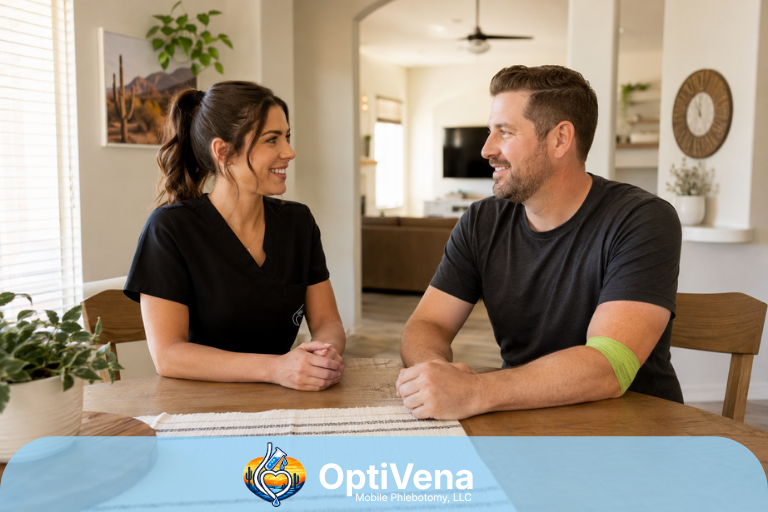
Here's something most people never stop to think about: for basically all of medical history, if you needed blood drawn or a checkup done, someone came to you. That wasn't a fancy add-on service. It was just how medicine worked. Your kitchen table was the exam room. The doctor showed up at your door.
So when people hear "mobile phlebotomy service" and assume it's some new tech-world convenience trend, we get it, but it's actually the opposite. The lab visit is the newer idea here. And it's only been around for a few generations.
So How Did We End Up Driving to a Lab?
Honestly, it came down to logistics. As insurance networks grew and lab testing got more standardized around the mid-1900s, it made a lot of sense to centralize everything, staff, equipment, processing, into a handful of big facilities. For the system managing thousands of samples a day, that was efficient. It kept costs predictable and let providers scale fast.
What it didn't do was ask whether patients actually liked it better. Somewhere along the way, the waiting room and the drive and the "come in whenever we can fit you" scheduling just became normal, and nobody really pushed back.
We're Just Bringing the Original Idea Back
A mobile phlebotomy service isn't reinventing anything. It's closer to going back to how this always worked, just updated for how lab testing actually functions today. The whole point is getting the house-call experience back without giving up an ounce of accuracy, compliance, or proper handling.
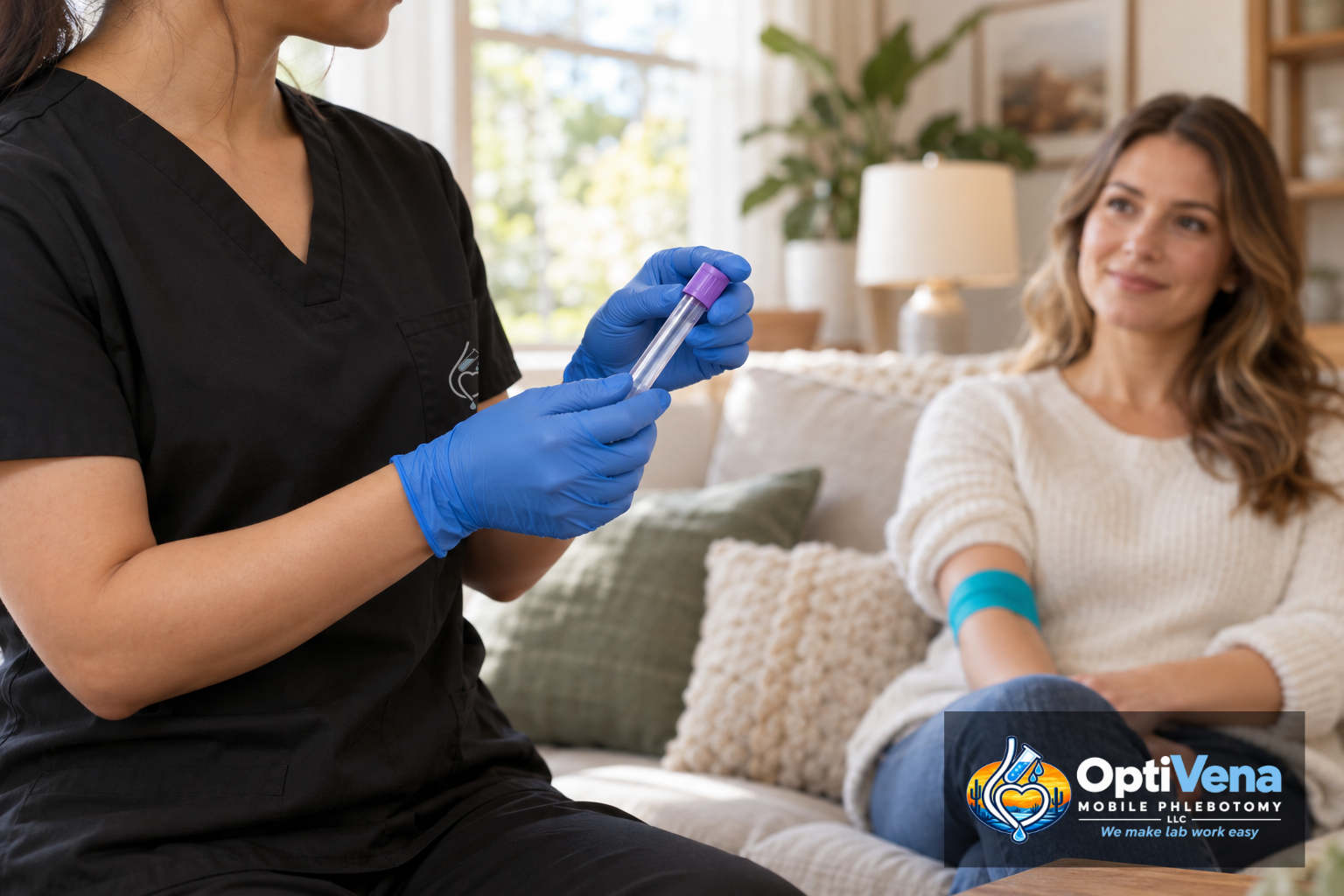
That's really the entire idea behind OptiVena. You get a relaxed, one-on-one appointment in your own home, and your sample still goes through every step a certified lab requires, right tubes, correct labeling, proper handling, all of it. Nobody's cutting corners to make it convenient.
What Actually Goes Into a Mobile Draw
Bringing the appointment to your living room doesn't make the medical part easier. If anything, it demands more from the person doing the draw.
Our certified phlebotomists follow the exact same technique and sterile procedure you'd expect at any clinic, single-use equipment, proper protocol, no shortcuts. For specialty and mail-in kits, that also means handling things like centrifuging and serum separation on-site, correctly, the first time, since there's no lab tech two doors down to fix a mistake. And every appointment is just one patient. No line, no clock ticking, no rushing to move to the next chart.
That's the real standard a mobile phlebotomy service is built on. Not just where the appointment happens, but how well it's done once you're there.
Why This Is Resonating in Chandler Specifically
Chandler clients tend to ask more detailed questions before booking, and we like that. People here want to know how the sample's handled, what happens after the draw, how results actually make it back to their provider. It's less about hesitation and more about wanting the full picture before deciding, which honestly makes for a better appointment on both ends.
For a lot of folks here, booking a mobile phlebotomy service isn't really about dodging a waiting room. It's about wanting the same quality of care without burning an hour of their day to get it. Routine panel, specialty kit, ongoing therapeutic phlebotomy, doesn't matter, the appointment fits into a Chandler schedule instead of fighting it.
Some Things Deserve a Comeback
Centralized labs solved a real problem, for the system that built them. Nobody was really optimizing for the patient's actual experience in that equation.
A mobile phlebotomy service doesn't make you choose between accuracy and not wasting your whole afternoon. It's just a return to putting the patient first, built for how people actually live now.