
 Blood Draw Guide
Why Labs Reject a Blood Specimen and Ask for a Redraw
The phone call usually comes a day or two later. "The lab wasn't able to run your sample. Can you come back in?" You did everything you were told, you sat through the draw, and now you get to do it again.
Here's what most people never hear: a redraw is rarely about you. It's almost always about what happened to the tube between your arm and the analyzer, and a lot of that is fixable. We'll be straight about our side of it too. We aren't perfect, so redraws do happen with us, just rarely. When one does, we make it easy.
What "Rejected" Actually Means
A lab rejects a specimen when it can't trust the result. Running a damaged sample anyway would hand your provider a number that looks real and isn't, and that's worse than no number at all. So the lab flags it, and someone calls you.
The rejection reasons come from a short, predictable list.
The Usual Reasons a Specimen Gets Rejected
- Hemolysis. The red blood cells broke open in the tube and spilled their contents into the serum. It most often happens with a rough draw, a forceful pull through a small needle, a tube shaken instead of gently inverted, or a long wait before the sample was spun. It can throw off potassium badly, which is why a hemolyzed sample often can't be used.
- Not enough blood. Labs call it "quantity not sufficient." A slow vein or a collapsing one can leave a tube short, and some tubes are strict about it. Coagulation tubes, for example, have to be filled to the line because the blood-to-additive ratio is part of the test.
- A clotted tube. Tubes with an anticoagulant need to be inverted gently several times right after filling. Skip it, and a clot can form that ruins a CBC.
- The wrong tube, or the wrong order. Each tube color carries a different additive, and filling them out of order can carry a trace of one into the next. It's the kind of mistake that only shows up as a strange result.
- A labeling problem. The name or date of birth on the tube doesn't match the order. Labs reject these without a second thought, because a mislabeled sample is a patient safety problem.
- Time or temperature. Many tests need the serum separated from the cells within a window, and some need the sample kept cool, frozen, or out of light. A tube that sits in a hot car or a courier bag too long can fail all of it.
- A missed fasting or timing requirement. A cloudy, fatty (lipemic) sample from a recent meal can interfere with a lipid panel, and a timed test drawn at the wrong hour can't be interpreted. Sometimes the lab accepts it and your provider asks for the redraw.
- A mistake on the lab's side. It happens. A specimen can be mishandled at the lab, lost in transit by a courier, or lost after it arrives. None of that has anything to do with the draw itself, and you still end up needing a new sample.
Look at that list again. Only one or two of those are about your body. The rest come down to technique, labeling, and handling, which is exactly where a careful draw makes the difference. Handling after the draw, in a courier bag or on a lab bench, is the part nobody on the draw side fully controls.
What You Can Do to Lower Your Odds
You can't control the handling, but you can help with the parts you can reach.
- Hydrate the day before. Full veins fill tubes faster and with less force, which protects against both short tubes and hemolysis. We cover the details in our guide to drinking water before a blood test.
- Follow the fasting instructions on your order exactly. If it says 12 hours, count 12 hours. Water is fine unless your provider says otherwise.
- Have your order ready and legible. The name on your ID, the name on the order, and the name on the tube all have to match.
- Mention supplements and medications. Some, like high-dose biotin, can skew certain results. Tell your phlebotomist, and ask your provider whether to pause anything before the draw.
- Tell us about any timing requirement. Timed tests, such as a morning cortisol, depend on the hour. If the order says a time, say so when you book.
- Say so if you have hard-to-find veins. A struggling draw is a hemolysis risk, and a calm one is not. Our post on hard to find veins explains what helps.
Why a Draw at Home Cuts the Risk
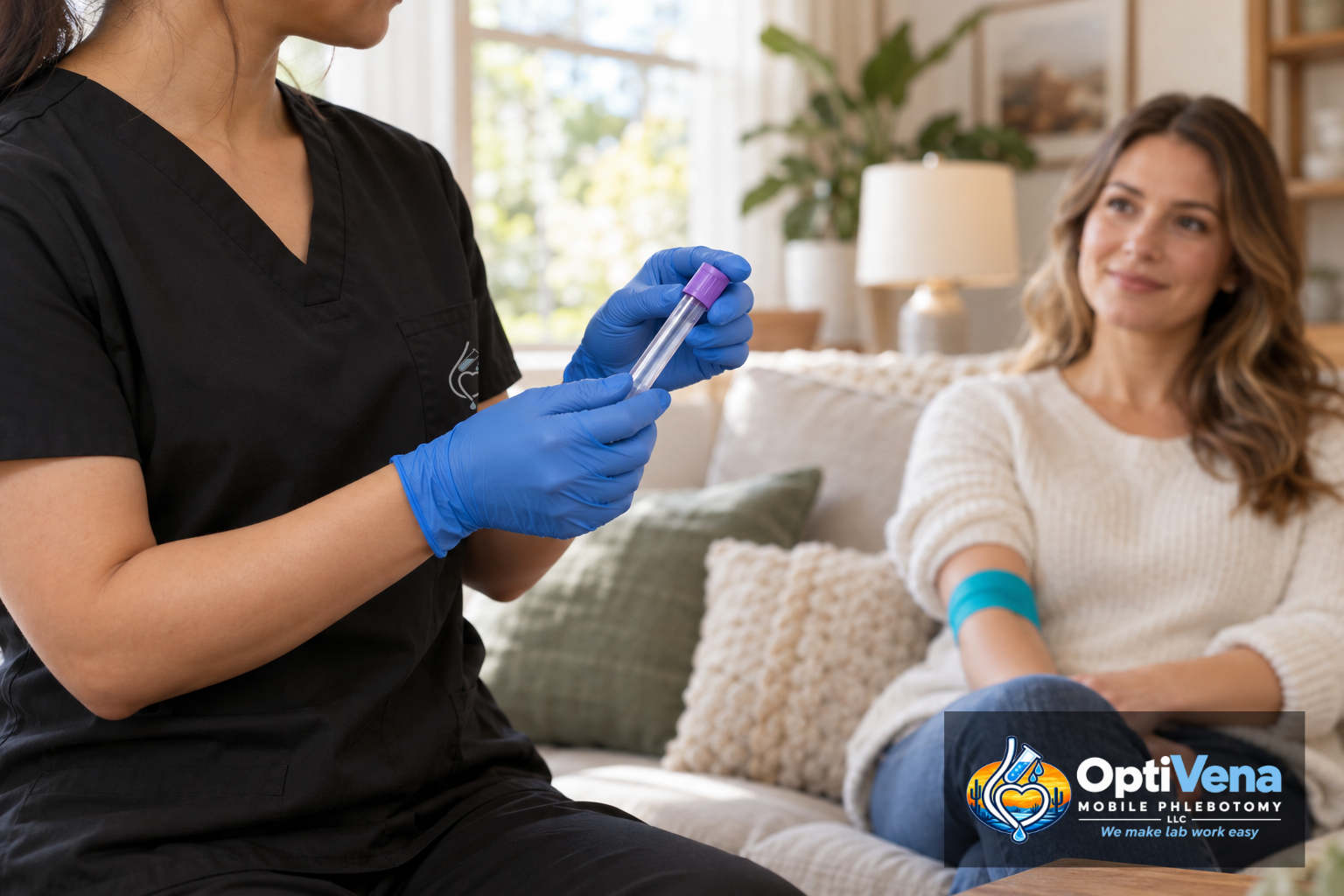
Go back through the rejection list and notice where each problem starts: rushed technique, labeling in a hurry, and a sample waiting around. A visit at your home takes out most of those.
- There's no clock running. Our certified phlebotomists can take the time to pick a good vein and keep the flow steady, instead of fighting a line of people.
- Tubes are labeled at your side. They're labeled in front of you and checked against your ID, not carried to a back counter first.
- Tubes are inverted and handled gently. Proper inversion and order of draw are part of how every visit is run.
- Processing happens when the test requires it. When a test needs the serum spun and separated, we do that and deliver the sample to the lab ourselves, so it doesn't sit in a bag waiting its turn.
That last point matters most for mail-in and specialty testing, where the handling instructions are strict. We go through how that works on our specialty kit collection page. And if you've never had a visit at home, here's what to expect during your first one.
If You Get the Call
First, don't assume you did something wrong. Then work through these steps.
- Ask what the problem was."Hemolyzed," "quantity not sufficient," and "mislabeled" lead to different fixes.
- Ask whether the same order still works. Often it does, but confirm with your provider's office so you aren't turned away at the next draw.
- Ask about fasting. If the first draw was fasting, the redraw will be too.
- Book the redraw somewhere calmer. Mention the rejection reason when you book, so your phlebotomist knows what to watch for.
When It Happens With Us
Our redraw rate is very low, but it isn't zero. A tube can come up short, a sample can get damaged, and sometimes the lab simply loses or mishandles a specimen. Whatever the cause, here is how we handle it.
- We call the lab and get the details. We confirm exactly what happened and pull as much detail as the lab can give us, so we know whether it was the draw, the handling, or something on their end.
- If it was our mistake, the redraw is a courtesy from us.
- If the lab made the error, the redraw is offered at a reduced rate.
- Either way, it's easy. You don't chase the lab or start the booking over. We sort out the details and get a time on the calendar.
Questions We Hear About Redraws
Does a hemolyzed sample mean something is wrong with my blood?
Almost never. The cells usually break in the tube, outside your body, from the way the sample was drawn or handled. It says very little about your health.
Is a redraw my fault?
Rarely. Collection technique, labeling, and handling cause most rejections, and those aren't on the patient. Labs also lose or mishandle specimens, and couriers lose them too.
How long can a blood sample sit before it's a problem?
It depends on the test. Some are fine for a day, and others need the serum separated within a couple of hours. That is why the trip from your arm to the lab matters.
Can you do a redraw if another lab rejected my sample?
Yes, as long as we have a valid order for the tests. Bring the order and tell us the rejection reason when you book.
Do you ever have to redraw a sample?
Yes. Our redraw rate is very low, but we aren't perfect. If it happens, we contact the lab to find out what went wrong. A redraw that's our error is a courtesy from us, and one caused by the lab is offered at a reduced rate.
Will I need to fast again?
If the original order required fasting, yes. Check the instructions again and follow them to the hour.
Get It Right the First Time
A careful draw, a bedside label, and a handled-with-care delivery to your lab take most of the guesswork out of whether your sample gets used. And if something does go wrong, we handle it with you and make the next visit easy. If you've been called back before, tell us when you book and we'll take it from there.


