 Blood Draw Guide
Hard to Find Veins? Why Some Blood Draws Take Three Tries and What Actually Helps
"You're a hard stick." If you've heard that sentence, you probably heard it from someone on their second or third attempt, right before they went to get a coworker. It gets said like a fact about you, something on the level of your blood type.
It isn't. Veins that are hard to find are real, but most difficult draws come down to three things working against each other: the vein, the conditions, and the time the person holding the needle was given. Only one of those is yours.
What Makes a Vein Hard to Find
Here's what is usually going on under the skin.
- Small or deep veins. Some people simply have narrow veins, or veins that sit deeper in the arm where nobody can see them. Deep veins are often perfectly good veins. They just have to be found by touch.
- Veins that roll. A rolling vein isn't slippery. It just isn't held firmly in place by the tissue around it, so it slides sideways when the needle arrives. This gets more common with age, as skin and connective tissue lose some of their grip.
- Fragile veins. Older skin, long-term steroid use, and blood thinners all make veins easier to bruise and quicker to collapse under suction.
- Scarred veins. Years of frequent lab work, IVs, or infusions leave scar tissue in the spots that got used the most. Those favorite veins get tough and less cooperative over time.
- Veins that are hiding today. Cold, dehydration, and nerves all narrow your veins. Honestly, a chilly waiting room and a racing pulse can turn an easy arm into a difficult one for the afternoon.
Notice that the last one has nothing to do with your anatomy. A lot of people who think they're a hard stick are really an easy stick who keeps getting drawn cold, dry, and anxious.
Why the Third Try Happens
A busy draw station runs on the clock. There's a line, there's a number system, and the person drawing you may have a few minutes to get you seated, stuck, labeled, and out. That works fine for the arm with a vein you can spot from the doorway.
It works badly for everyone else. Finding a difficult vein is slow, careful work. Rush it and you get a guess, and a guess is how one stick becomes three.
What an Experienced Phlebotomist Does Differently
None of this is secret. It just takes time and practice.
- They feel before they look. A good vein has a bounce to it under a fingertip. The best vein in your arm is often one you can't see at all, and a visible vein isn't always a usable one.
- They check both arms. And the forearm, and the hand if needed. The first vein found isn't automatically the right one.
- They warm the site. A few minutes of warmth brings veins up closer to the surface. So does letting your arm hang below your heart for a minute.
- They anchor the vein. Holding the skin taut just below the site keeps a rolling vein from sliding away. This single step fixes most "your veins roll" problems.
- They pick the right equipment for the vein. A butterfly needle gives more control on small or fragile veins. It isn't the answer every time, though. Too small a needle can slow the flow and damage the sample.
- They watch the tourniquet. It should be on for about a minute, not five. Leave it on too long and it can change your results.
- They know when to stop. Standard practice is two attempts, then stop and rethink. Nobody should be working their way down your arm.

What You Can Do Before and During the Draw
You have more say in this than you'd think.
- Say it up front."My left arm is better." "They usually use the one on the outside." "A butterfly worked last time." That's useful information, and a good phlebotomist wants it.
- Start hydrating the day before. A glass of water in the parking lot helps a little. A full day of normal fluids helps a lot. We go deeper on drinking water before a blood test in a separate guide.
- Stay warm. Wear sleeves you can push up, and hold a warm mug while you wait.
- Skip the fist pumping. A gentle closed hand is enough. Pumping hard doesn't raise a vein much, and it can throw off your potassium result.
- Speak up about pain. A pinch is normal. A sharp, electric, or shooting feeling is not. Say "stop" and the needle should come out.
- Mention anything about your arms. A past mastectomy with lymph nodes removed, a dialysis fistula, or an old injury can rule out one side entirely.
If you tend to get lightheaded, tell your phlebotomist that too. Here's why blood draws make some people dizzy and what can be done about it.
Why Being at Home Changes the Draw
Think about the list of things that hide a vein: cold, dehydration, nerves, and a rushed pair of hands. Now think about your own living room.
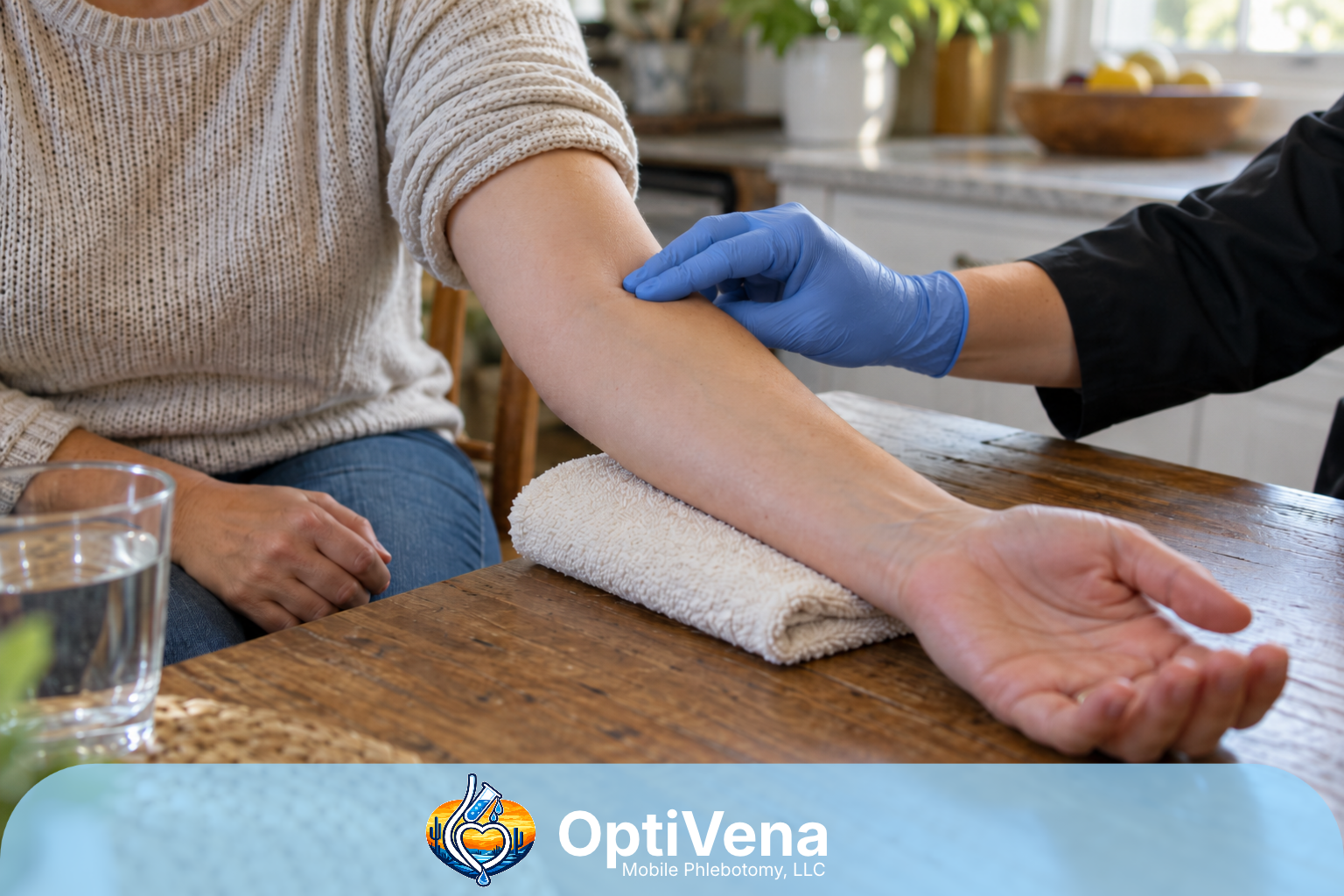
You're warm. You're in your own chair, with your own water glass. Nobody is calling the next number. Our certified phlebotomists have time to check both arms, warm the site, and choose the vein on purpose. And when the same team sees you every few months, they learn your arms. They know which vein works, and they stop relying on the one that's been used a hundred times.
That matters most for the people who dread lab day: kids, older adults with fragile skin, anyone drawn often for a chronic condition, and anyone who has been told one too many times that they're difficult. If you've never had a home visit, here's what to expect during your first visit.
When Vein Quality Matters Even More
Routine lab work can be done on a small vein with a small needle. Therapeutic phlebotomy is different. Removing a full unit of blood takes a larger needle and a vein that can keep up with it, so site selection is everything. If you're on a regular therapeutic schedule, rotating sites and protecting your good veins between visits is part of the plan.
Questions We Hear About Difficult Veins
Why do my veins roll?
The vein isn't anchored firmly by the tissue around it, so it shifts when touched. It's common, it gets more common with age, and it's managed by holding the skin taut below the site.
Does drinking water really make a draw easier?
Yes. Well-hydrated veins are fuller and easier to feel. It works best when you start the day before, not ten minutes before.
Is a butterfly needle less painful?
Often, since it's smaller and easier to control. It's the right choice for small or fragile veins, but it isn't automatically better for every draw.
How many times should someone try?
Two attempts is the standard most professionals follow. After that, the right move is to stop and reassess, not to keep going.
Can blood be drawn from my hand?
Yes. Hand veins are a normal option when the arm isn't cooperating. They can be a bit more tender, so they're usually a second choice.
You're Probably Not as Difficult as You've Been Told
Most people with a history of bad draws don't need a miracle. They need to be warm, hydrated, and unhurried, with someone experienced who takes a minute to feel for the right vein. That's a much easier thing to arrange at your kitchen table than in a waiting room. When you book, tell us which arm works.