 Blood Draw Guide
Tired, Weak or Just Off After a Blood Draw? What's Normal
The draw took five minutes, and now all you want is the couch. Is that normal, or is something wrong?
Here's the honest answer from people who draw blood for a living: most clients feel fine after a routine draw. When someone does tell us they're wiped out, it's usually after a lot of tubes, or after therapeutic phlebotomy, where a much larger amount of blood comes out on purpose.
Why a Routine Draw Rarely Knocks You Out
A routine draw takes less blood than most people picture. A few standard tubes usually add up to about a tablespoon or two, compared with about a pint for a blood donation. So if you're exhausted after three tubes, the amount of blood probably isn't the whole story.
These are the things that tend to make a draw feel harder than it was.
- A lot of tubes. This is the routine draw where we do hear about tiredness. A big panel takes more volume, and you can feel that.
- An empty stomach. Feeling light-headed is common after a fasting blood test. You can eat as soon as the draw is over, and plain water is fine while you fast unless your provider told you otherwise.
- Not enough fluids. Arizona makes this one easy to miss. We go deeper on drinking water before a blood test in a separate guide.
- Stress or needle nerves. Stress can trigger a vasovagal reaction, and people can feel tired for a bit after one. If it's more of a lightheaded feeling, here's why blood draws make some people dizzy.
- You already felt bad. Plenty of people get labs because something is off. If you were already worn down, the draw didn't cause that, and it won't stop just because the draw is done.

Therapeutic Phlebotomy Is a Different Story
This is where we hear about tiredness the most, and it makes sense. Therapeutic phlebotomy usually removes about a pint of blood, though your provider's order sets the amount. Weakness, lightheadedness and fatigue are known side effects after that much volume loss. Your body restores the lost fluid within a few days, and red blood cells take longer, usually weeks to a couple of months. If you want the full picture, here's what happens to your body after a therapeutic phlebotomy.
What About Feeling Off the Next Day?
If you felt fine after a routine draw and feel unwell the next day, the small amount of blood taken usually isn't the first thing to suspect. Think about what else is going on, like poor sleep, not eating, a bug going around, or whatever sent you for labs in the first place. Mention it to your provider, especially if those symptoms are why you were tested.
What Usually Helps
Nothing fancy here. This is what we tell our own clients.
- Keep up with your fluids. Fluids help your body rebuild its blood volume, especially after a larger draw. Go easy on alcohol, which can dehydrate you.
- Eat something. This matters most if you fasted or had a larger draw. If you have a condition that affects your diet, follow your provider's guidance.
- Lie down if you feel faint. Lie down with your feet up until it passes, and get up slowly.
- Rest when you need it. If your body is asking for a slower afternoon, take it. After therapeutic phlebotomy, skip strenuous activity and heavy lifting for at least 24 hours, or longer if your provider says so.
When to Call Your Doctor or 911
Being a little tired is one thing. Not being able to get through your day is another.
Call your doctor if:
- You can't function. You feel too faint, have signs of low blood pressure, or feel too sick to get through your day.
- You fainted. Get seen if you've never fainted before, if you faint often, or if you have new symptoms with it.
- The draw site looks wrong. Watch for warmth, redness, swelling that gets worse, or pain that gets stronger.
- Your hand or arm changes. Tingling or numbness in your fingers needs a call, even if the arm looks fine.
Go to the ER if:
- The site keeps bleeding. It's still bleeding after 15 minutes of firm, steady pressure.
- The dizziness won't quit. Dizziness or fainting doesn't go away, and don't drive yourself.
Call 911 if someone faints and doesn't wake up within a minute or so, isn't breathing, or is hurt. Also call if there's chest pain or pressure, a pounding or irregular heartbeat, a seizure, trouble speaking or seeing, or trouble moving an arm or leg. Fainting also calls for 911 if the person is pregnant, has diabetes, or is over 50.
This is general information, not medical advice. If you're worried about how you feel, call your provider, and don't wait if it seems like an emergency.
Why Being at Home Helps
Think about where a fasting draw usually leaves you: in a parking lot, hungry, with a drive ahead of you. At home, your kitchen is a few steps away and your couch is closer than that.
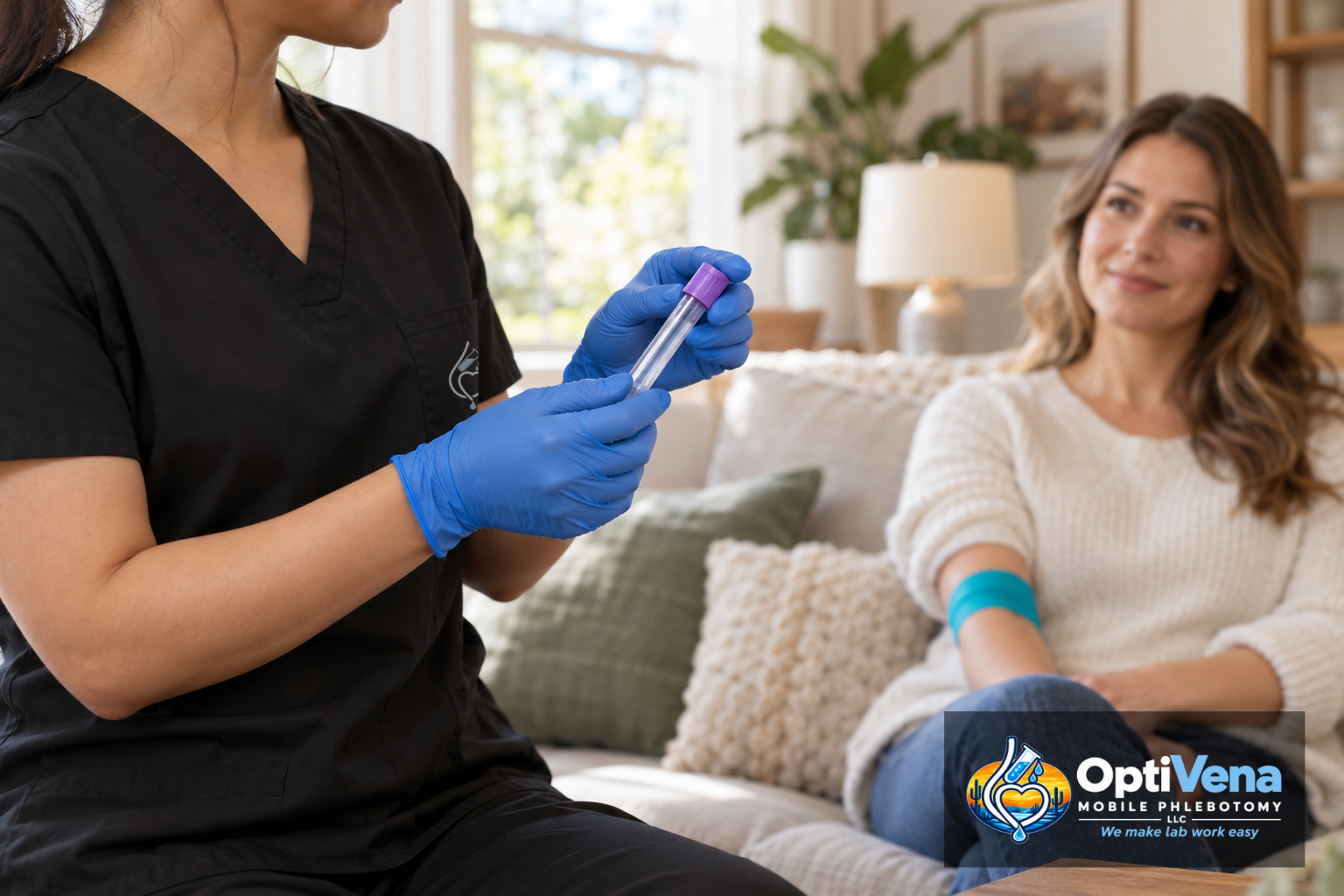
Our certified phlebotomists come to you, so there's no driving on an empty stomach and nowhere you have to be when we leave. If you've never had a home visit, here's what to expect during your first visit.
Questions We Hear After a Draw
Is it normal to feel tired after a blood draw?
After a routine draw, most people feel fine. It's more common after a lot of tubes, and fatigue is a known side effect of therapeutic phlebotomy because of the volume removed.
Why do I feel weak after getting blood drawn?
The usual suspects are an empty stomach, low fluids, or a larger draw. Fluids, a meal and some rest typically help. If you're too weak to function, call your doctor.
How long does it last?
After a routine draw, any tiredness is usually short lived. After therapeutic phlebotomy, many people start feeling better soon after, and some feel more tired than usual for a day. If it isn't improving, call your provider.
Why do I feel better after getting blood drawn?
After a routine draw, it may just be relief that it's over. For people treating hemochromatosis, phlebotomy may relieve tiredness over the course of treatment. Your provider is the right person to ask what to expect for your condition.
Do Your Next Draw From the Couch
Fasting labs, a long list of tubes, or a therapeutic phlebotomy all go easier when you don't have to drive home afterward. Our certified phlebotomists come to you.